
 I’m a potter. In my free time, I love to throw a lump of clay on a rotating wheel and then shape and form it into something useful and beautiful.
“Yet you, Lord, are our Father. We are the clay, you are the potter; we are all the work of your hand” (Isaiah 64:8 NIV).
Until I started working with clay, I used to think this verse meant “relax and let God handle it.” Now? I recognize that there are two parts to the equation. Yes, the potter is the one who has a vision for clay, seeing its potential, and working it toward becoming a beautiful bowl or plate. The potter knows the clay body, and whether it’s clay that makes a great mug (a gritty clay works well) or a delicate vase (try porcelain).
But the condition of the clay can either allow for that vision or stop it cold. If the clay is too wet, too dry, too cold, too airy or too dense, the potter can’t put it on the wheel. Thankfully, the clay can usually be reworked. Dry clay can sit in water for a while. Wet clay can be slowly dried out. Temperature can be changed (but don’t ever let your clay freeze; I did that once). Tough clay can be kneaded. Airy clay can have the air holes beaten out (but it takes work).
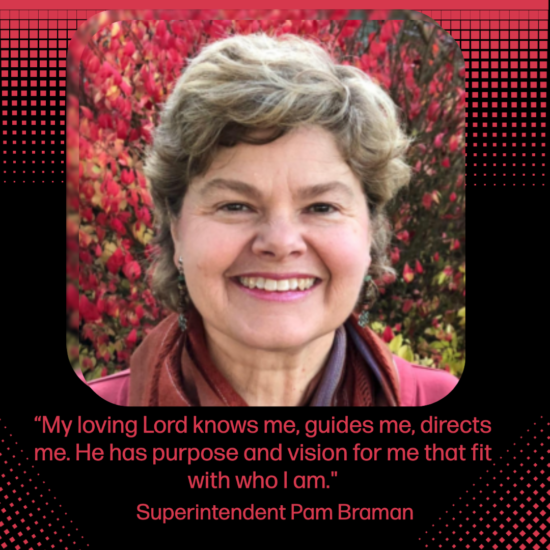
Now that I understand the work of a potter, I have a better understanding of what my role is — and isn’t — in my own spiritual formation. My loving Lord knows me, guides me, directs me. He has purpose and vision for me that fit with who I am. He is working toward making something beautiful.
My first job? The condition of the clay. Am I moldable in His hands?
Just as water, air, temperature and additives can impact the condition of the clay, Bible reading, prayer, fellowship and other spiritual disciplines impact the condition of my soul. These are the things that can make me moldable.
But there’s a step beyond being moldable: It’s being surrendered. The potter at the wheel gets to decide what He does with the clay. I’ve had to learn that faith and trust are vital to the work my Savior does on the wheel.
Some years ago, I was struggling with the “why” of something difficult in my life. I was grieving what I thought “should have been.” As I asked God “why?” the verse that states He was “a man of sorrows, and acquainted with grief” (Isaiah 53:3 KJV) was brought to my attention. Was it possible that the “why” for this difficulty was simply to make me more like Jesus? Was that enough? It was a moment of faith, trust and surrender. If that was the purpose of the grief in my life, it would be enough.
When my soul-condition is moldable and surrendered, then I know God the Potter is creating something of beauty in me.
Pam Braman, D.Min., is the superintendent of the Genesis Conference.